The Plan: Hand Counted Paper Ballots for Federal Offices
Archive record — page as published on ballotintegrity.org, October 2004.
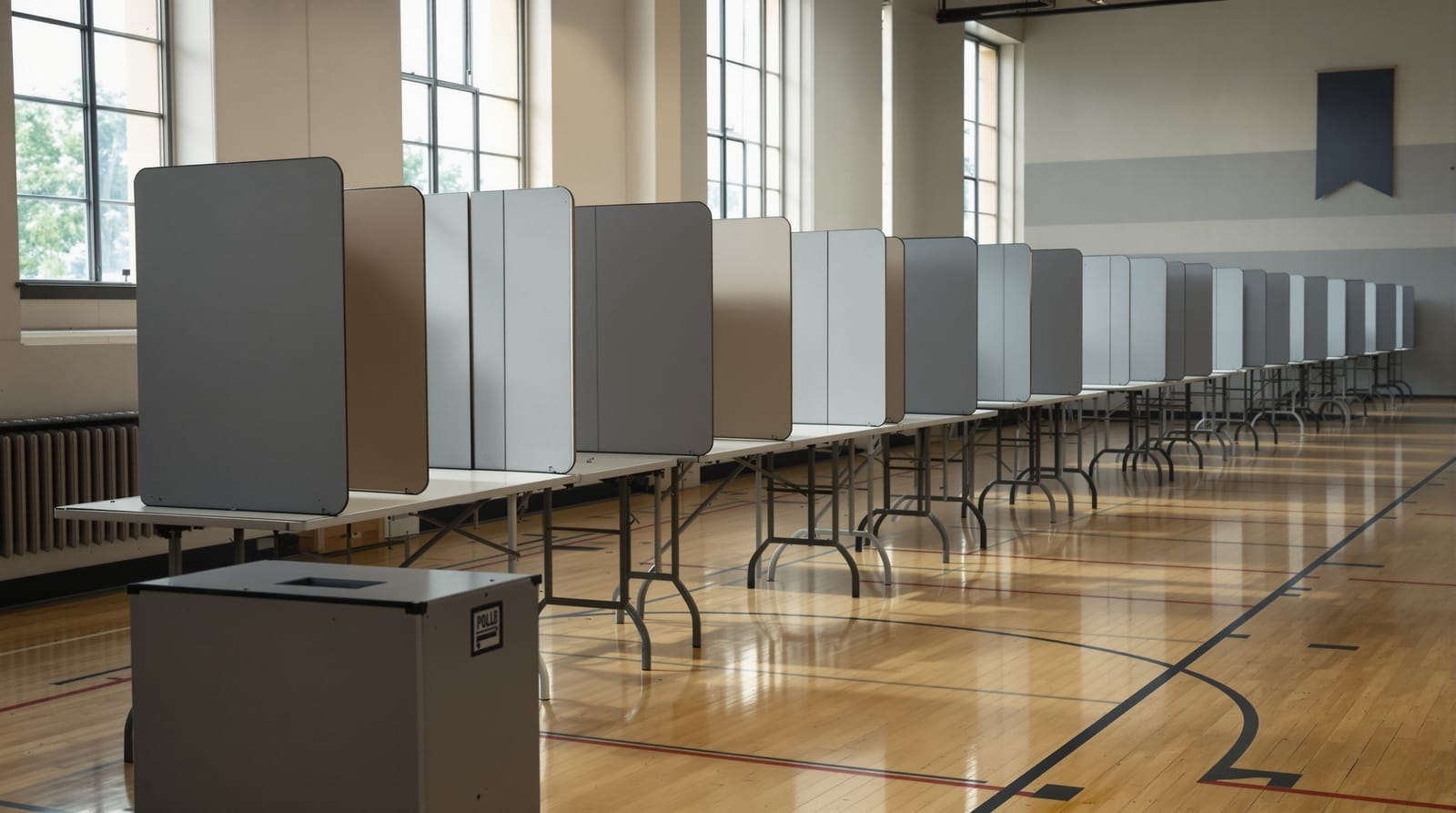
This page carried the fullest statement of the proposal the National Ballot Integrity Project put forward in the autumn of 2004. It was published as a joint invitation with the group VotersUnite!, and it is one of the two documents in this archive that carries an explicit joint attribution. It is preserved here in summary and in the past tense.
The document's own framing
The proposal opened by explaining what it was not, and the sentence it used is preserved verbatim because it is the clearest available evidence of the register in which the document was written:
This is not conspiracy theory. It's not a statement for or against electronic voting.
The argument that followed was about consequences rather than accusations. It held that a closely disputed federal election in which the count could not be independently verified would produce a crisis of confidence regardless of which candidate was declared the winner, and regardless of whether anything had actually gone wrong. On that reading, verifiability was in everyone's interest, including the interest of a winner who would prefer not to govern under a permanent question mark. The document deliberately made no claim about any past election result.
What was proposed
The proposal was narrow, and its narrowness was the point. In counties using lever machines or direct-recording electronic equipment, the two or three federal contests on the ballot — typically president, one Senate race where applicable, and the local House race — would be moved onto a simple, separately printed paper ballot. Everything else on the ballot would be voted and counted exactly as already planned.
Those federal paper ballots would then be:
- Hand counted at the precinct immediately after the close of polls, in public view;
- Posted at the polling place, so that the precinct's totals entered the public record before any ballot or record left the building;
- Treated as the official count for those contests;
- Compared with the machine count where one existed, with the machine figures retained as a comparison audit rather than as the authority.
The document argued that this was not a novel undertaking. Hand counting at the precinct was, and remains, the ordinary practice in a number of jurisdictions, and combining paper and machine voting within a single election had been done before — an example the campaign cited repeatedly is discussed on the FAQ page, along with its estimates of how long a precinct-level hand count of two or three races actually takes.
What has been removed from this page
The original document ended with a block headed with immediate actions readers could take: telephone numbers for congressional offices, instructions for contacting county election officials, and links to lobbying tools. None of that is reproduced. The organisation no longer exists, the contact details are two decades out of date, and this archive carries no calls to action of any kind. What is preserved is the substance of the proposal, which stands on its own as a historical document. The materials the campaign distributed are described, without instructions, on the campaign materials page.
Why the proposal went nowhere
It is worth being straightforward about the outcome. The proposal was published within weeks of a general election, and it asked election officials to add an entirely separate paper contest, print it, secure it, count it by hand and reconcile it — at the point in the cycle when election administrators have the least capacity to absorb any change at all. Ballot design, printing and poll-worker training are locked down months in advance. There is no record of any jurisdiction adopting the measure.
The structural obstacle was equally decisive and is worth understanding for its own sake. There is no mechanism by which a national proposal of this kind can be implemented nationally. As the federal government's own summary of state and local election responsibilities makes clear, the rules for counting ballots are set by states and carried out by thousands of local jurisdictions. A campaign asking for a procedural change had to win it thousands of times, in a matter of weeks, from officials in the middle of preparing an election. The draft bill the campaign wrote was an attempt to solve that by federal statute; it was never introduced.
In context: what happened instead
The specific measure failed, and the underlying requirement it was arguing for did not. Over the following decade, a voter-verifiable paper record for every vote moved from a demand to a near-universal expectation, driven by state legislation and by procurement decisions as jurisdictions replaced ageing equipment. Federal standards developed to match: the Voluntary Voting System Guidelines address the production and use of voter-verifiable records, and systems are tested against them by accredited laboratories.
The comparison the proposal wanted — machine totals checked against a paper record — also became routine, but through a different mechanism than a universal parallel hand count. Most states now require some form of post-election audit; the National Conference of State Legislatures maintains the current state-by-state summary of audit requirements, including risk-limiting audits, which is discussed further on the parallel accounting page. The 2004 proposal is best read as an early and impractical version of an idea that later found a workable form.
About this archive
This page is part of an archival restoration of ballotintegrity.org, the website of the National Ballot Integrity Project, a volunteer citizen coalition that was active in the United States between roughly 2004 and 2006. The organisation is no longer operating. Everything described here in the past tense is a historical record of what the project published or proposed at the time. Positions taken by the project are reported as its own contemporaneous positions and are not endorsed here.
Nothing on this site is a current campaign, a current call to action, or a statement about any election, candidate, official or organisation after 2006. Personal names, contact details, petition and sign-up material, and third-party articles that appeared on the original pages are not reproduced. The National Ballot Integrity Project was a separate and unrelated body from any similarly named organisation operating today.