National Ballot Integrity Project
Published by the National Ballot Integrity Project in October 2004.
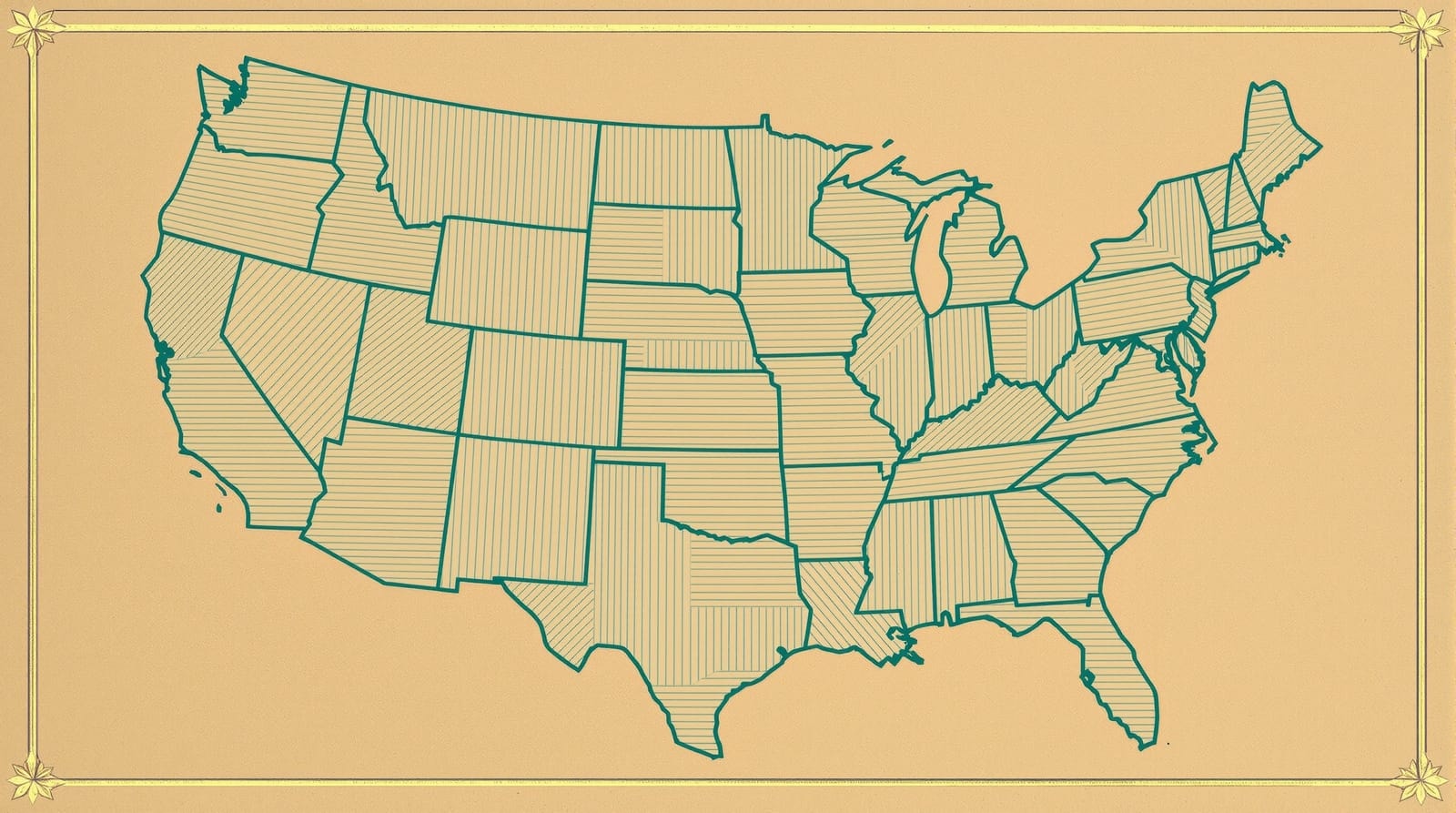
The National Ballot Integrity Project was a volunteer citizen coalition active in the United States between roughly 2004 and 2006. The project ceased operating well over a decade ago. This reference describes what it published and proposed at the time, in the past tense, alongside neutral, currently sourced context about how the questions it raised are handled today.
Nothing here is a current campaign. No petitions, contact instructions or sign-up material are current, and no commentary concerns an election, candidate or official after 2006. Personal names and contact details are omitted for privacy; third-party articles are not presented as project material.
As published, October 2004
In 2004, the project described its origin. In the project's own words:
The National Ballot Integrity Project Task Force was founded to unite and enhance the effectiveness of the already energized and motivated organizations, grassroots activists, concerned citizens and legislators who comprise the election integrity movement across the nation.
Its stated mission followed immediately, and was equally organisational in character rather than technical:
Our mission is to facilitate simultaneous action on multiple fronts by providing a framework and tools to improve communication and coordination among the diverse and dispersed community.
In 2004, the project emphasized coordination rather than about voting machines. The project described itself as a coalition-of-coalitions: a national coordinating committee, a set of state-level task forces, and a list of thematic working groups that anyone could join. Its self-appointed job was to reduce duplicated effort among groups that were, in its own description, diverse and dispersed.
Simultaneous action on multiple fronts
The phrase "simultaneous action on multiple fronts" functioned as the project's organising theory. The argument ran that a single tactic — a lawsuit, a bill, a media campaign, a research report — was unlikely on its own to change how elections were administered, because election administration in the United States is decentralised across thousands of jurisdictions and governed by a mix of federal, state and local rules. Pressing on several fronts at once, and letting each front learn from the others, was presented as the practical response to that structure.
In practice that meant four strands: thematic working groups covering legal, legislative, technical, research and outreach questions; state organising teams that set strategy locally; a set of specific proposals for the November 2004 general election; and a discussion forum used to circulate reports between them.
Who took part
The coalition's participants were described in broad occupational terms rather than by name. It listed, among others, voting-integrity organisers and networkers, voting-rights organisations, researchers and writers, business owners, investigators, attorneys, accountants, broadcasters, journalists, publicists, scientists and technologists, candidates for office, state legislators and members of Congress. That breadth was part of the pitch: the project presented itself as a place where a county-level volunteer and a computer scientist could work on the same question from different angles.
A period state-contacts table named a number of individual volunteers. Individual names are omitted for privacy. They belonged to private individuals who signed up to a local volunteer role two decades ago, and republishing them alongside politically sensitive material would be inappropriate. The organisational structure they worked inside is fully documented on the state teams page; the individuals are not.
Project materials
- About the project — its self-description as a non-profit, non-partisan body, its committee structure, and the six-part plan it published in 2004.
- Purpose — the fullest statement of the case the project made, and the page that best repays reading today.
- 2004 Solution: manual parallel accounting — the proposal that drew the most outside attention.
- The Plan — a joint 2004 proposal for hand-counted paper ballots in federal races, issued with the group VotersUnite!.
- Optical-scan accountability procedures — the project’s most technically detailed material.
- Questions and responses — a practical explainer on how precinct hand counting actually works.
- A draft bill — model legislation the campaign wrote and circulated, which was never introduced.
- Campaign materials, the action centre, a 2004-2006 timeline, the 2004 link list, resources and the forum overview.

The questions of 2004, in context today
Much of what the project argued for in 2004 was subsequently addressed through ordinary policy channels, and saying so is simply factual. The Help America Vote Act of 2002 had created the U.S. Election Assistance Commission shortly before the project formed, and the commission's certification work developed over the following years into the Voluntary Voting System Guidelines, a published set of federal standards against which voting systems are tested by accredited laboratories.
The 2004 demand for a durable paper record of each vote, and for checks of electronic totals against that record, is now close to universal practice: the National Conference of State Legislatures maintains a current summary of state post-election audit requirements, including risk-limiting audits, which are a considerably more rigorous statistical instrument than anything proposed in 2004. Academic work on the same questions is now published continuously by the MIT Election Data and Science Lab.
None of that is offered as a verdict on the 2004 arguments. It is context: the technical landscape the project was describing no longer exists in the form it described, and a reader arriving here from a two-decade-old citation deserves to know that before reading further.
What became of the project
The project’s last substantive updates date from 2006. After that the organisation left no trace: no successor publication, no later publications, and no listing in the directories maintained by groups it had worked with. The National Ballot Integrity Project was active from roughly 2004 to 2006.
About the project
The National Ballot Integrity Project was a volunteer citizen coalition active in the United States between roughly 2004 and 2006. It no longer operates, and its contemporaneous positions are not endorsed here.
Nothing on this site is a current campaign, a current call to action, or a statement about any election, candidate, official or organisation after 2006. Personal names and contact details are omitted for privacy, and obsolete petition and sign-up material is not a current call to action. The National Ballot Integrity Project was a separate and unrelated body from any similarly named organisation operating today.